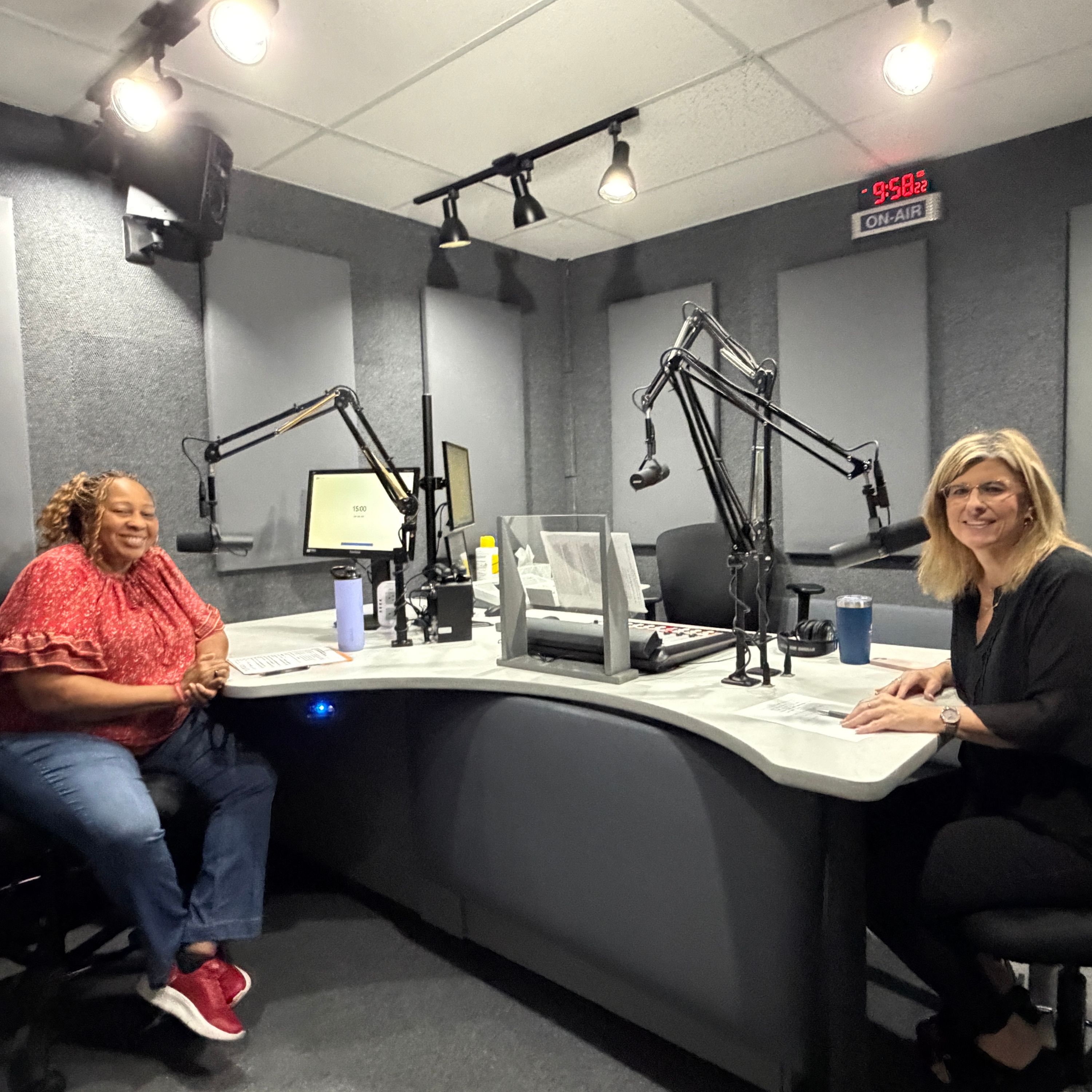
[00:00:01] Speaker A: Welcome to Shining Through Inspired Voices of Autism with show host Jennifer Gensler. My name is Mandarin and I have autism. Thank you for taking the time to learn more about the world of autism. If you enjoy what you hear today, don't forget to subscribe to this podcast.
[00:00:25] Speaker B: Hey, everyone, this is Jennifer Dantzler, and I'm the executive director and founder of inspirend, a nonprofit whose mission is to create truly inclusive communities through education and engagement. The goal of this podcast is to shine a light on real people and their stories in hopes of inspiring others who are on this journey of autism. Either themselves, their child, their loved one, their coworker. I truly believe ignorance is not bliss, and we cannot be inclusive communities if we do not understand the people in the community.
With autism now affecting 1 in 31 people, we need to get louder about this topic. We recognize that autism is a spectrum. There are a lot of people with a lot of different needs, a lot of resources available or none available. And we know that in every episode, we can't meet everyone's needs for their specific interest. However, we hope that in each episode, you do gleam some kind of insight as to how you can help your child or yourself be a better advocate. And as we go through our podcast, our goal really is to address the entire spectrum, the various needs, the various environments that we're going to be in. And we hope that there's something in every episode for each one of you. So let's get started.
We are here today for a really special episode. I know you're gonna love it. I'm here with my friend Kade, and Kade and I were talking at lunch today. We've known each other, we know, over 20 years, probably about 25 years. And I'm going to tell you a little bit more about Kate in a second. But, Kate, thanks for being here.
[00:01:49] Speaker C: Thank you very much for having me today.
[00:01:50] Speaker B: Kate is now 27 years old, right?
Yes. And so I've known Cade since he was three or four. We can't remember exactly what age.
[00:01:59] Speaker C: Probably more like three.
[00:02:00] Speaker B: Okay. And Kade was actually in one of my early intervention programs. Cade was a rock star. And Cade basically graduated from it. And then Cade, a few years later, moved to Arizona. And this is a very special treat because Kade has actually flown back here to Houston to see myself and also former colleagues of my Cindy and Michelle. So we are just been having an amazing day, right, Kade?
[00:02:23] Speaker C: Yes, we sure have.
[00:02:24] Speaker B: Okay, so, Kade, let's start and help the listeners understand a little bit about you. Tell me a little bit about your diagnosis.
[00:02:30] Speaker D: I Was diagnosed with autism at 3 years old when I was still living here in Houston, Texas. And I didn't really know about it until about, like, 11 years later when I was 14 years old.
[00:02:41] Speaker B: And you knew about it at that point because your mom and dad told you?
[00:02:43] Speaker D: Yes, and I also read a book about how I was diagnosed and all of that.
[00:02:49] Speaker B: Do you remember what was your reaction at the time when you were diagnosed or when you learned about it and when your parents talked to you about and when you read about it?
[00:02:55] Speaker D: I was a little bit shocked. I started to accept it more and more the more I learned about I had autism. And so I've just been embracing it ever since.
[00:03:06] Speaker B: Very well said. Okay, so let's try to go back, if we can, to your early years or as early as you can remember. What were some of the things that you struggled with early on?
[00:03:15] Speaker D: Communication skills and making friends. And while I do still struggle with a little bit today, it's nowhere near as hard or challenging as it used to be for me.
[00:03:25] Speaker B: Do you remember early on either some of the supports you got or what do you remember being the most helpful for you?
[00:03:32] Speaker D: Whenever I did something right, I get a token. I'm sure everyone who. Who has done all that before remembers it very well. I most certainly do.
[00:03:41] Speaker B: Okay.
[00:03:41] Speaker D: And after you get a certain amount of tokens, you get some sort of a reward, whether it be break or a dessert or whatever. It could be anything.
[00:03:51] Speaker B: Okay, so that was part of your early intervention doing aba, right?
[00:03:55] Speaker D: Yes.
[00:03:56] Speaker B: Okay. ABA in itself can be a little controversial.
[00:03:59] Speaker C: And some people, it sure can be.
[00:04:01] Speaker B: Okay. And some people will say ABA has been a wonderful tool to help them be successful. And some people say ABA takes away control, creates robots. What are your thoughts on that?
[00:04:12] Speaker D: ABA is a wonderful thing. And I can't speak for anyone else. It helps give me more control on my life. While some others will say it takes away control. But then again, I'm only speaking for myself. I cannot speak for anyone else.
[00:04:27] Speaker B: As I've talked about in other podcasts, just like every intervention or medical therapy or medical service out there, there's good neurology and there's bad neurology.
[00:04:37] Speaker C: Absolutely.
[00:04:38] Speaker B: There's good ABA and there's bad aba,
[00:04:40] Speaker D: and I luckily got the good aba. And I can only hope many others who went through ABA got the good aba too.
[00:04:48] Speaker B: Okay, I love that. And he's not just saying that because I was his ABA provider. Right. I didn't want you to say this. In elementary school. What do you remember? Like, did you get Services. Were you fully included? Were you in special ed classes?
[00:05:02] Speaker D: The special education classes didn't really begin until I was in middle school, but the specific special education classes I was in was English because, unfortunately, I hate to admit this, but. But I sometimes struggle with comprehending what. What I've been reading and what I've been told to read and having to do those English exams who. Those are not my favorite, I don't think. I don't think they're anyone's favorite.
[00:05:26] Speaker B: Amen to that. I totally agree with that. Yeah. Yeah.
[00:05:29] Speaker D: But been a little bit of a struggle for me. It still is today. I will say that right now.
[00:05:34] Speaker B: Okay.
[00:05:35] Speaker D: But I just had to learn to embrace the struggle and ask for help whenever needed. And in English, I just had to have help a lot of times.
[00:05:45] Speaker B: Okay, so we're going to talk about that as we get into your older schooling about some of the accommodations and stuff you received. Now let's talk a little bit about high school and what did high school look like for you?
[00:05:54] Speaker D: I participated in school sports. I did not do it in my freshman year, unlike some people have, because I wanted to get myself adjusted to a new campus building.
[00:06:03] Speaker B: Okay.
[00:06:03] Speaker D: And also, like, what to expect in high school.
[00:06:06] Speaker B: So for your academics and then we'll go into your sports, you were in mainstream classes or special ed classes?
[00:06:12] Speaker D: I had a mixture of both.
And the only special education class I had was in English. Everything else was typical, including math, because math is my strong set.
[00:06:22] Speaker B: Okay. And we're definitely going to talk about that as you're going into a lot of that for your career. And you had mentioned earlier about accommodations. So you had said, like, accommodations were very helpful in high school.
[00:06:32] Speaker D: Absolutely, they were.
[00:06:33] Speaker B: What kind of accommodations did you get?
[00:06:35] Speaker D: Extra test time and also extended due dates on assignments. That was really about all I remember receiving.
[00:06:41] Speaker B: Okay.
[00:06:42] Speaker D: Because some. Some people with autism, you're like, it may struggle under pressure and such as, like, having to get things completed within a certain time frame. So by. By having the accommodation of extended due dates, I was able to have some weight pulled off my shoulders and work a little bit more stress free. I know I'm doing the thing right and. And not the thing fast and wrong.
[00:07:06] Speaker B: Yes. And, you know, it's funny you bring that up because we had another podcast guest who talked a lot about the same things. He talked a lot about extra time on tests because anxiety would come up.
[00:07:16] Speaker C: A lot of people with autism have anxiety.
[00:07:19] Speaker D: People on the autism spectrum like myself and Brennan, who. Who was also on this podcast, have
[00:07:24] Speaker C: a little More anxiety than the rest of us do.
[00:07:27] Speaker B: That's exactly right. And just a little side note, we're hoping that we're going to get Kade to meet Brennan after this and get them to talk and share a little bit about themselves with each other. So I'm for two of my podcast guests and two of my favorite people in the world to come together. Okay, so now let's talk about high school and your extracurricular activities, which were what?
[00:07:45] Speaker D: They were cross country and track and field.
[00:07:47] Speaker B: All right. And you like running, huh?
[00:07:49] Speaker D: Yes. In fact, I've done over 50 half marathons in my life. Also three full marathons in my life.
[00:07:55] Speaker B: Okay, I need you to say that again for the listeners, because this is, like, such a victory that most of us in the world in general have not had. What have you done?
[00:08:03] Speaker D: I've done over 50 half marathons and three full marathons. And for those of you who don't know what the distance of a full marathon is, it is 26.2 miles. So a half a marathon would be 13.1 miles.
[00:08:15] Speaker B: And your marathons, what time did you finish your marathons?
[00:08:19] Speaker D: Just over four hours. You cannot go from couch to marathon without a lot of training, hard work, and dedication. I would spend somewhere between 16 and 20 weeks training for the full distance.
[00:08:32] Speaker B: Wow. And that's kind of where you lose me, because I would be out after week one.
But, Kate, that is just so incredible. And I just. I really. I cannot commend you enough for that. I mean, talk about commitment and hard work and dedication. Holy cow.
[00:08:46] Speaker C: Yeah.
[00:08:46] Speaker D: And this is the same hard work and dedication I had to graduate from high school, community college, and university.
[00:08:54] Speaker B: All right, so let's go into that next. So after high school, talk about what you did.
[00:08:58] Speaker D: I went into community college to do all my general education classes. Community college is a lot cheaper than a major university. It allowed me to go through college without accumulating student loans because I know how stressful student loans can be, and especially if you have them piling up and piling up.
[00:09:14] Speaker B: So you got your associate's degree in in general studies. Okay. And I got your cores done. Okay.
[00:09:20] Speaker D: Yep. And I also got my Bachelor of science in information technology in May of 2024 at Arizona State University.
[00:09:27] Speaker B: That is awesome. Congratulations.
[00:09:30] Speaker D: Thank you very much.
[00:09:30] Speaker B: In information technology.
Love it. What'd you do after you graduated college?
[00:09:35] Speaker D: I spent the last few months looking for a job. And I will just say this right now, finding a job is basically a job in itself.
[00:09:42] Speaker B: Yes, absolutely. And again, another one of our guests Jake said the exact same thing.
It is. It's a huge thing in itself. Okay. And so you found a couple things to talk a little bit about the interim jobs that you've had.
[00:09:54] Speaker D: The year before I graduated from asu, I had a summer internship in it and then after that I went back to college again for my senior year. One of the things I did in my senior year of college that I'm very much proud of is when I was doing a year long capstone project where I was creating an independent truck routing software for the long distance drivers and I had to do it all from scratch and I had to have a lot of help on it. But it doesn't change the fact on how proud of it I am.
[00:10:23] Speaker B: That is incredible.
[00:10:24] Speaker D: It's something I will remember for the rest of my life when in my senior year of college I had to do a year long capstone project again,
[00:10:31] Speaker B: conviction and follow through which you've already proven you can do through your marathon. So that is incredible. And then you also did another contract job, right?
[00:10:40] Speaker D: Yes, I had two contract jobs inside of data centers. One from October through December of 2024 and another one from May through July of 2025. Since then I've one went back to college again and in a community college to pursue a data center operations certification. I started this again in October 2025 and I'll be finished with it in this upcoming May. But as a result of that, I will have broadened my job search opportunities and not only on the IT side of data centers, but also on the operations side of data centers. It's a mission critical environment. Just like hospitals, just one second of downtime can be detrimental for the data centers.
[00:11:21] Speaker B: Yes, yes.
[00:11:23] Speaker D: And other 24, 7, 365 or 366 if we're talking leap years. Mission critical facilities.
[00:11:29] Speaker B: Okay, so what's your ideal job after you're done with this certificate?
[00:11:33] Speaker D: Back in a data center? Because I love working in a data center environment and while I do have experience on the IT side, I don't have any real world experience on the operations side. I've had to work through some labs and throughout my college courses and it's helping me understand better the operation side of data center, including mechanical and electrical and everything that's needed to keep a data center running.
[00:11:54] Speaker B: So for our listeners who are listening and want to hire or are willing to give Kade a chance, you can email
[email protected] because I can tell you I can first hand attest to having known Cade for we think about 24 years, that Cade would be an incredibly dedicated worker. And if he's not already proven that through his marathon, his degrees, and yet still going back to try to further his education and get a well rounded resume. So hire Cade. Now back to the podcast. Right. I know we talked a little bit about the whole idea of finding a job. So tell me a little bit about your experience in trying to find a job. Was that easy? Was that hard?
[00:12:33] Speaker C: Always going to be challenging. It's. It will never be easy. There are some industries where it's easier to get jobs than others.
[00:12:39] Speaker D: Marketing is not really easy to get and it has really become the same way, which I believe, believe it's a shame because almost every company yet needs it, including marketing companies.
[00:12:49] Speaker B: Absolutely. And I know you and I talked at lunch a little bit about it's always the chicken and egg and a hard thing because your resume might not make it to the SEC round two of piles because you don't have a lot of experience. But if no one's willing to give you some time to try to get first get experience, how do you get that experience to then build your resume? Right. And I know we also talked a little bit about interviews. What is happening in the interview world? And I asked you a question earlier. I said, have you ever gotten any crazy behavioral questions like what color would you be and why did you ever get any of those questions, Kate? And what was your answer to that?
[00:13:24] Speaker C: Okay, why are you even asking me this question? This has nothing to do what job I'm applying to and whether or not I can successfully do the job or the amount of experience I have and compare it to what experience you are requiring at a minimum.
[00:13:38] Speaker B: Absolutely. And Kate's being really nice because at lunch he said it in a little different way, a little bit not so pg. So.
And it was really funny. However, what I will say is that's a lot of what we do in our neurodiversity in the workplace training. Right. Is we're trying to get companies to move away from these behavioral questions because to your point, it's not really indicating whether or not you'll show up for the job, be able to do your job well, or even be a team player, whether or not you could answer the question of what color you could be and why. So we want to do away with these behavioral questions. Places that are trying to hire because 80% of the autistic population are unemployed or underemployed, and yet we have these companies that have these pain points of These positions they can't fill, but they're not knowing how to tap in to our whole population and the incredible skill sets they have.
[00:14:22] Speaker C: If these companies are just trying to ask you these unrelated behavioral questions, it's no wonder why they can't fill jobs.
[00:14:29] Speaker B: Right. The questions just don't make sense.
[00:14:30] Speaker C: The question just does not make any sense whatsoever. And you're going off topic in the process. I will say to these companies who do that, the more you do that, the less candidates you're going to have that stay with you and the bigger the hole that you're going to dig for yourself.
[00:14:43] Speaker B: That's right. And we do know from a lot of research out there that people who are on the autism spectrum are some of the most loyal and dedicated employees. And I know a lot of businesses struggle with turnover. My guys, as I call you. Right. Like they're going to be loyal and faithful. They're going to do their job, they're going to follow the rules, they're going to do what you ask of them. They're not going to engage in a lot of gossip. You're the ideal employee and now we just got to figure out how to get companies to see that. So I want to shift gears for a second and talk a little bit about your social side and your personal side. What would you say are some of your achievements in life you're most proud of?
[00:15:18] Speaker D: Graduating from Arizona State University with a bachelor's degree?
[00:15:22] Speaker B: Yes. Incredible. Awesome.
[00:15:24] Speaker D: Being able to run full marathons and sticking to the dedication of the training, I would spend anywhere between 16 to 20 weeks training for a full marathon.
[00:15:33] Speaker B: Right. Even in college you did also seek out and search and receive accommodations, right?
[00:15:38] Speaker C: Yes, I had extra test time as well as extended deadlines on assignments.
[00:15:43] Speaker B: Okay. So I think that's also really important for our listeners, whether they're their own self advocates or parents. Because he has a full bachelor's degree from a very well known and respected university.
And accommodations doesn't mean you get less of a degree. They help you be successful.
[00:16:00] Speaker C: Yes.
[00:16:00] Speaker B: Yeah. And I think there are a lot of people who think it's either or, but it's not. Those accommodations are meant to be there to help you get your degree. And nowhere in life, nowhere on your resume are those accommodations listed. They're also something that you could advocate for in your, your workplace too.
[00:16:17] Speaker C: Correct.
[00:16:18] Speaker B: When you meet people and talk to people, do you self disclose that you have autism?
[00:16:21] Speaker C: Sometimes I do and sometimes I don't.
[00:16:23] Speaker B: How do you make that decision or choice?
[00:16:25] Speaker D: If I'm Talking to someone who has autism or they voluntarily disclose that themselves, I will say I can relate to that because I have aut too.
[00:16:33] Speaker B: Okay, when you don't say it, what's your reasoning?
[00:16:36] Speaker D: I just don't want the fear of getting judged negatively for it.
[00:16:40] Speaker C: And unfortunately that hasn't happened to me quite yet. Crossing my fingers that it never does
[00:16:44] Speaker D: because I would hate to be judged negatively just because of my autism diagnosis.
[00:16:49] Speaker B: Perfectly said. I've always said that I want to be able to help self advocates or parents have this comeback that if like you're in the grocery store and say you accidentally invade someone else's like personal circle or personal space or I call it like their hula hoop. Right. And they turn around and they're rude and they say, dude, what's your problem? I really want one of my guys to turn back and say, I have autism. What's your problem? Right. Like this is my legitimate thing, but like your excuses, you're just kind of being a jerk.
[00:17:18] Speaker C: Yeah. And I have unfortunately met a lot of rude people.
[00:17:21] Speaker D: Where I live there are rude people,
[00:17:22] Speaker B: but they're also good people out there in the world too.
[00:17:25] Speaker D: Yeah, yeah.
[00:17:26] Speaker C: And, and, and while I have met
[00:17:28] Speaker D: a lot of good people, I've also met a lot of rude people.
[00:17:30] Speaker B: Yeah. The awareness of autism is getting a little bit better, right?
[00:17:34] Speaker C: Yes, I would definitely have to agree with that. As opposed to like say, I don't know, 40 or 50 years ago.
[00:17:39] Speaker B: You know, one of the things I say in life is I just wish every one of us just gave every one of us more grace.
[00:17:45] Speaker C: Yes.
[00:17:46] Speaker B: And so I think with autism now being right now at the time of this podcast, 1 in 31, because there's become more awareness, we're seeing a little bit more grace in the world, but we still have a long way to go, right?
[00:17:57] Speaker C: Yes, absolutely. And we're going to continue to have a long way to go as long as we humans are still alive on this earth.
[00:18:03] Speaker B: Well, that's true, that's very true. But as we talk about that in the community, what is something that you feel like we as a community could do better to support people on the spectrum?
[00:18:14] Speaker C: There are some states that, that, that
[00:18:16] Speaker D: are better for autistic children and adults than others. And there's also a rise in companies having a so called neurodiversity hiring program that takes away from a traditional interview with questions and all that to, to being more focused on the individual about what have you gone to school for, what are your skill sets and everything that that's related to what the job is and the description that's listed.
[00:18:39] Speaker B: And so you think those neurodiversity hiring programs are good? Do you think they're an added benefit to companies?
[00:18:44] Speaker C: Yes.
[00:18:44] Speaker B: Yeah.
[00:18:45] Speaker D: Just because someone is neurodiverse does not mean they do not make good team players or employees on a team.
[00:18:51] Speaker B: Absolutely. And there's another gentleman in our community who said it so well where he's very successful as a project manager in very large companies. And he said when he has to go travel for business, then he'll go and go to the workplace. But a lot of times when you're traveling, everyone likes to then go out at night for, you know, happy hour. But he doesn't go to that because he finds that social navigation hard.
[00:19:14] Speaker D: Yes.
[00:19:15] Speaker B: And he said but then at work he gets labeled as not being a team player because he wasn't willing to go out and hang out in a lack of social structure environment. And that's frustrating.
[00:19:25] Speaker C: Yes, it can be very frustrating, especially for someone who actively tries to make an effort to make sure that neurodiverse people get hurt.
[00:19:34] Speaker B: This was your first flying experience alone?
[00:19:37] Speaker D: Yes.
[00:19:38] Speaker B: From Arizona to Houston.
How was that experience?
[00:19:41] Speaker C: Well, it was a little nerve wracking at first.
[00:19:43] Speaker D: That didn't change the fact that I was looking forward to doing a solo
[00:19:47] Speaker C: trip for the first time.
[00:19:48] Speaker D: And after doing it today, other than having to get back home to Arizona,
[00:19:52] Speaker C: I'm going to continue to do more solo trips throughout my lifetime, including the states such as California, Colorado, Oregon, Washington, Texas, which is where I am right now.
[00:20:01] Speaker D: Florida, South Carolina, New Jersey, you name it.
[00:20:03] Speaker B: You have a lot of bucket list items. So again, if you're an employer listening and you're not in Arizona, which is where Cade currently lives, he is more than willing to fly for an interview. More than willing to. We've even talked about considering relocation if the job was the right job. Right?
[00:20:17] Speaker C: Yep. So as long as the job opportunity
[00:20:20] Speaker D: is a great opportunity and it's direct hire full time. Yeah, yeah.
[00:20:24] Speaker B: You're not going to go transfer your Life for a 10 hour a week part time job.
[00:20:28] Speaker D: No.
[00:20:28] Speaker B: Right. Which makes total sense. Absolutely.
[00:20:31] Speaker C: I've always had a willingness to relocate
[00:20:33] Speaker D: for direct hire full jobs for the longest time. And I will say this to everyone
[00:20:37] Speaker C: listening, life is short.
[00:20:39] Speaker D: And some people just, just don't want
[00:20:41] Speaker C: to stay in a particular area for, for a long time or just be
[00:20:45] Speaker D: with a certain banking provider for a long time or whatnot because life is just too short for that.
[00:20:51] Speaker B: Yep. So you're willing to take the bull by the horns and do what it takes. And you're. Even though you had a hard time finding a job, you decided to go back to school, continue to build your resume. Right. Continue to build your experience. And so your. Your tenacity, I give you an A plus on that one, that's for sure. If you have a parent on this podcast listening who's a parent of a newly diagnosed child, what would you tell that parent?
[00:21:13] Speaker D: Be there for them. Show them a lot of support, and tell them that just because you are newly diagnosed does not mean you cannot be successful in life. I have found a lot of success in my life, even though I am on the autism spectrum. Yeah. Like Brennan is. And I know he found a lot of success himself in life. And, like, right now. Yeah, he's currently living on his own. I'm currently. Not yet, but I'm hoping to do that soon.
[00:21:38] Speaker B: So, again, for our listeners out there, I can tell you firsthand, when Cade was three, he struggled with using words. He struggled with regulating behavior, struggled with navigating the world around him. Right. Like a lot of sensory overload. Yes, those kinds of things.
[00:21:53] Speaker D: And, you know, I don't have quite as much of a sensory overload as I used to. Sometimes it does come back.
[00:21:59] Speaker B: Okay. But you're sitting here today now, having completed college, having run marathons, having flown from state to state, and so I would say job well done to you, job well done to your parents, who I know have been huge advocates for you this whole time. I'm so proud of you. And I think that hopefully our listeners agree that you give hope and inspiration. I can't say enough. So, Kade, thank you so much for
[00:22:23] Speaker D: being here, and thank you again for having me.
[00:22:25] Speaker B: If you need help or resources, whether you're a parent, someone on the spectrum, a business or a community organization who want to know more or need help or want to share resources, please reach out to
[email protected] thanks for joining us
[00:22:41] Speaker A: on Shining through inspired voices of Autism. If you joined this episode, be sure to subscribe, please. I refuse to. And share with others who want to celebrate New York diversity. Until next time, keep Shining.